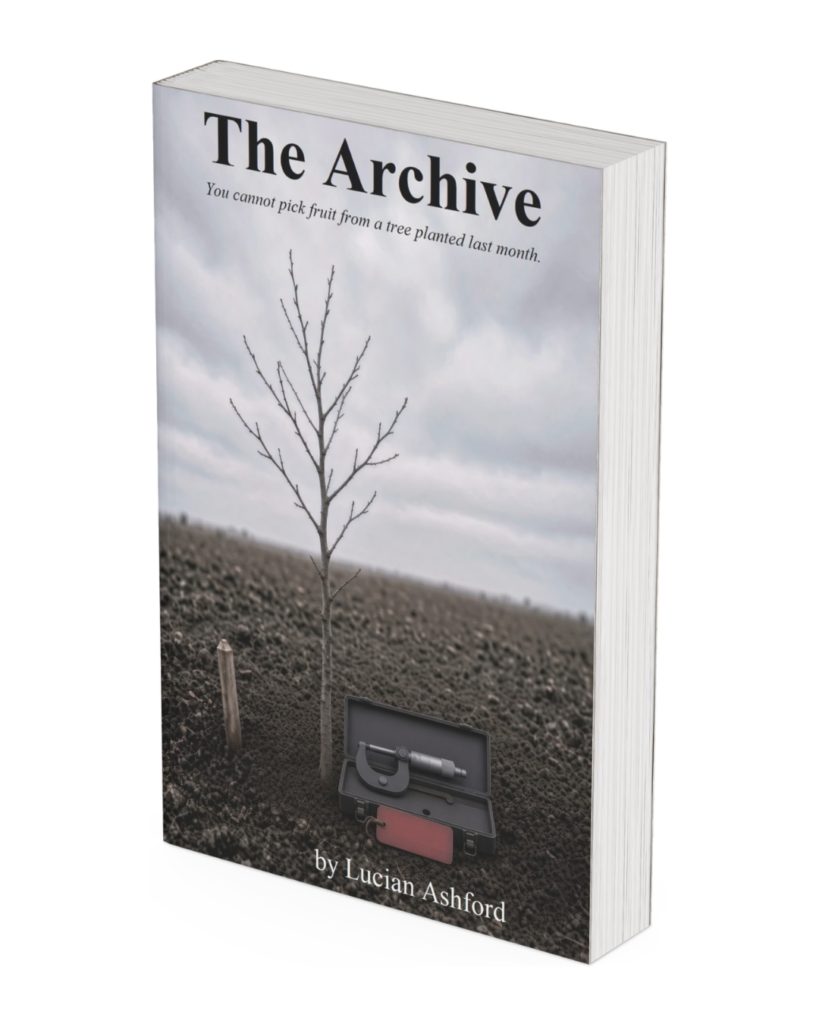
A young engineer is steered from a graduation party into the National Guard, a congressional office, and then a building that does not advertise what it holds.
Inside, the work is not treasure and not a private army. It is the unglamorous labor of keeping recovery capacity — the ability to teach, diagnose, repair, and rebuild — from quietly dying while the lights are still on.
The Archive is not a vault of relics and not a plan for the day after the lights fail. It is a working store of capacity: the people, records, tools, and habits that let a civilization teach a trade, diagnose a failure, repair a machine, and stand something back up while ordinary life is still running. The engineer does not arrive as a hero. He is moved, assigned, and then left inside a place that keeps no public name because publicity would turn the store into a prize. What follows is the sequence the work actually takes—who is let in, what can be measured, what living knowledge will not sit still in a file, how money is kept when one checkbook is not enough, and what happens when people who understand the value of a working store decide it should belong to them.